How Wheated Bourbon Differs from Traditional Bourbon
Wheated bourbon differs from most traditional bourbons primarily in its mash bill. Instead of using rye as the secondary grain, wheated bourbon replaces rye with wheat. That single change significantly influences flavor, mouthfeel, and the overall drinking experience.
For bourbon enthusiasts and collectors, understanding this distinction helps explain why wheated bourbons are often described as softer, sweeter, and more approachable than many rye-based bourbons.
What Is a Traditional Bourbon Mash Bill?
By law, bourbon must contain at least 51 percent corn. The remaining grains typically include malted barley and either rye or wheat.
Most bourbons use rye as the secondary grain, which contributes to the classic spice-forward character associated with many traditional bourbons. When wheat is used instead of rye, the result is what is known as wheated bourbon.
The Role of Rye in Bourbon
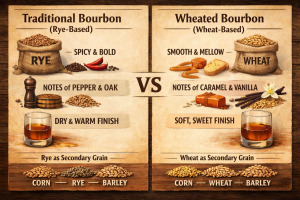
Rye contributes spice, pepper, and a slightly drier finish. Bourbons with higher rye content often present bold structure, complexity, and noticeable warmth on the palate.
This style of bourbon appeals to drinkers who enjoy a more pronounced spice profile and a sharper edge to the flavor.
What Is Wheated Bourbon?
Wheated bourbon replaces rye with wheat as the secondary grain in the mash bill. While the legal definition of bourbon remains the same, this substitution changes the flavor expression that develops during fermentation, distillation, and barrel aging.
The Role of Wheat in Bourbon
Wheat produces a softer and rounder flavor profile. Compared to rye-based bourbons, wheated expressions often present:
- A smoother mouthfeel
- Gentle sweetness
- Notes of caramel, honey, and baked bread
- Less spice and less aggressive heat
Because wheat lacks the sharp spice associated with rye, wheated bourbons often feel more mellow on the palate. Many drinkers perceive them as sweeter, even though the difference is primarily the absence of rye’s peppery character.
Flavor Comparison: Wheated vs Traditional Bourbon
- Mouthfeel – Wheated bourbon is often described as silky or creamy. Rye-based bourbons typically feel more structured and bold.
- Sweetness and Spice – Wheated bourbon leans toward softer, rounded sweetness with subtle warmth. Traditional bourbon often highlights spice, pepper, and drier oak tones.
- Finish – Wheated bourbons often finish smooth and lingering. Rye-based bourbons may present a drier, more assertive finish with lingering spice.
Why Wheated Bourbon Has Become So Popular
Collectors and enthusiasts often gravitate toward wheated bourbon because of its balance and accessibility. Its softer profile appeals both to seasoned bourbon drinkers and those newer to the category.
Without rye’s strong spice influence, oak-driven flavors such as caramel, vanilla, toasted sugar, and baking spices often become more noticeable as the bourbon matures in the barrel.
Some of the most sought-after bourbons in the world use wheated mash bills, including well-known expressions such as Maker’s Mark, Weller, and Pappy Van Winkle. Their popularity has helped elevate wheated bourbon’s reputation among collectors and enthusiasts.
FAQs About Wheated Bourbon
What makes wheated bourbon different from traditional bourbon?
Wheated bourbon replaces rye with wheat in the mash bill, which generally produces a smoother, rounder flavor profile with less spice.
Is wheated bourbon sweeter?
Many drinkers perceive wheated bourbon as sweeter because it lacks rye’s peppery spice. The result is often a softer and more approachable flavor experience.
Does wheated bourbon age differently?
The aging process itself is the same for all bourbon. However, the absence of rye spice can allow oak-driven flavors such as vanilla, caramel, and toasted sugar to become more prominent as the bourbon matures.
Is wheated bourbon better?
It ultimately comes down to personal preference. Those who enjoy smooth, mellow flavor profiles often favor wheated bourbon, while those who prefer spice and bold character may lean toward rye-based mash bills.
In the end, the difference between wheated and traditional bourbon comes down to grain selection and flavor expression. Mash bill decisions are one of the defining signatures of a distillery, shaping how a bourbon develops over years of aging and ultimately defining the character that ends up in the glass.